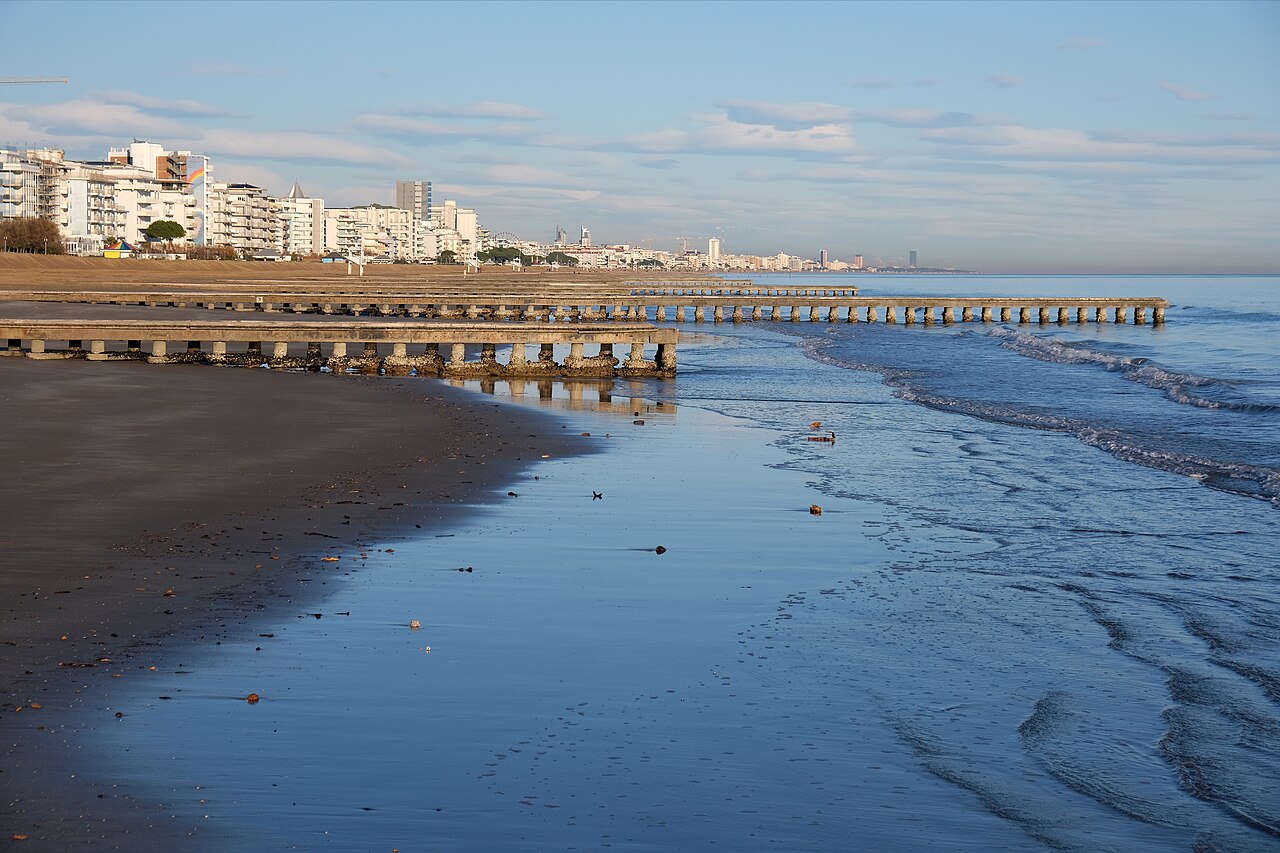
The area around Jesolo is one of the reasons the resort holds up as a destination for a longer holiday: you can step away from the beach for a few hours or a full day with great ease. A little over half an hour by water taxi brings you to Piazza San Marco; an hour by car gets you to Treviso; in a few minutes you can cross the Sile into the Cavallino-Treporti peninsula, a destination in its own right. This page summarises the day trips worth considering during a stay on the coast, with some practical notes on times and transport.
The historic centre of Venice
The most scenic way to travel from Jesolo to Venice is by water taxi. The principal service is Motoscafo Venezia Jesolo, running in summer from Jesolo Paese (Cavetta) and the tourist harbour through to Piazza San Marco, with a crossing of around 80 minutes and an indicative return fare of 30-35 euros per person. It is a journey that lets you see the northern lagoon from an unusual angle, skirting the islands of Burano and Sant’Erasmo before entering the San Marco basin.
The cheaper and almost equally fast alternative is the ATVO E13 bus to Piazzale Roma, from where you walk into Venice across the Calatrava bridge or pick up the vaporetti to the islands. Average time: 70 to 90 minutes depending on summer traffic, with a one-way ticket around 5.50 euros. The bus runs every 30 minutes in summer from the Lido’s main stops. A third option is the ATVO 23 bus to Punta Sabbioni, from where the ACTV 14 vaporetto reaches San Marco in 35 minutes: many Lido residents consider this the best route for those who want to avoid the chaos of Piazzale Roma.
Whichever route you take, a few practical rules apply. Set off early, ideally by 9:30, to avoid the peak heat and the queues at the first checkpoints. Wear comfortable shoes (Venice is entirely on foot, with extra steps over every bridge). Bring a refillable bottle of water — the historic fountains around the city are still active and supply drinkable water. Factor in the day-tripper access fee (variable, generally 5-10 euros on high-season weekends) introduced by the Venice municipality. In the evening, the last water taxi to Jesolo usually departs between 7 and 8pm: plan accordingly so as not to miss it.
The northern lagoon: Burano, Mazzorbo, Torcello, Sant’Erasmo
For those who have already seen Venice, the northern lagoon is often the most memorable excursion of a Jesolo holiday. It is reached by ACTV vaporetto from the Punta Sabbioni stop (Cavallino-Treporti) or from Treporti, on line 12, which loops between Punta Sabbioni, Treporti, Burano, Mazzorbo, Torcello, Murano and Fondamente Nove. A typical day takes in three stops: Burano for the colour of its houses and its lace, Torcello for the eleventh-century Byzantine basilica (the oldest in the lagoon), Mazzorbo for a slow lunch in an osteria, and Sant’Erasmo for those who want to see the kitchen-garden island that supplies the markets of Venice.
Indicative times: Punta Sabbioni to Burano by vaporetto, 30 minutes; Burano to Torcello, 5 minutes; Burano to Mazzorbo, a 10-minute walk over the footbridge. The ACTV day pass (24 hours, about 25 euros per person) is the sensible option if you plan more than one island in a day. Murano (for the glass) sits on the same line and rounds out the afternoon nicely if Torcello is done in the morning.
Cavallino-Treporti
The municipality of Cavallino-Treporti, separated from Jesolo by the mouth of the Sile, is the large peninsula reaching out into the lagoon. It is a complete destination in its own right, with campsites of European standard, orderly beaches, cycle routes and well worth a full day even when you are based in Jesolo. To reach it, you simply cross the bridge over the Sile by car or bicycle. From Jesolo Lido the cycle to central Cavallino is about 6 kilometres on a dedicated cycle path; continuing on to Punta Sabbioni adds another 7 kilometres along one of the most beautiful cycle routes in the Veneto, between kitchen gardens and lagoon views.
Things to see in Cavallino-Treporti: the Batteria Pisani, an Austrian (then Italian) military structure now converted into an exhibition space; the church of Santissima Trinità at Treporti, with its distinctive leaning bell tower; the Cavallino beach in front of the lighthouse, one of the most orderly of the upper Adriatic; the kitchen gardens of Sant’Erasmo, reached by vaporetto from Treporti. A day’s cycling from Jesolo to Punta Sabbioni and back, with a lunch stop on the lagoon, is one of the most rewarding experiences of a week on the Veneto coast.
Caorle and the eastern coast
Eastwards, beyond the mouth of the Piave, a coastline begins that is less famous to the general public but heavily frequented by Italian holidaymakers: Eraclea Mare, then Caorle, then Bibione. Eraclea Mare is a small seaside pinewood with a very wide stretch of sand and a long-established clientele of Veneto and Austrian families; it is worth a day for a different beach experience and a lunch under the pines. From Jesolo it is about 35 minutes by car.
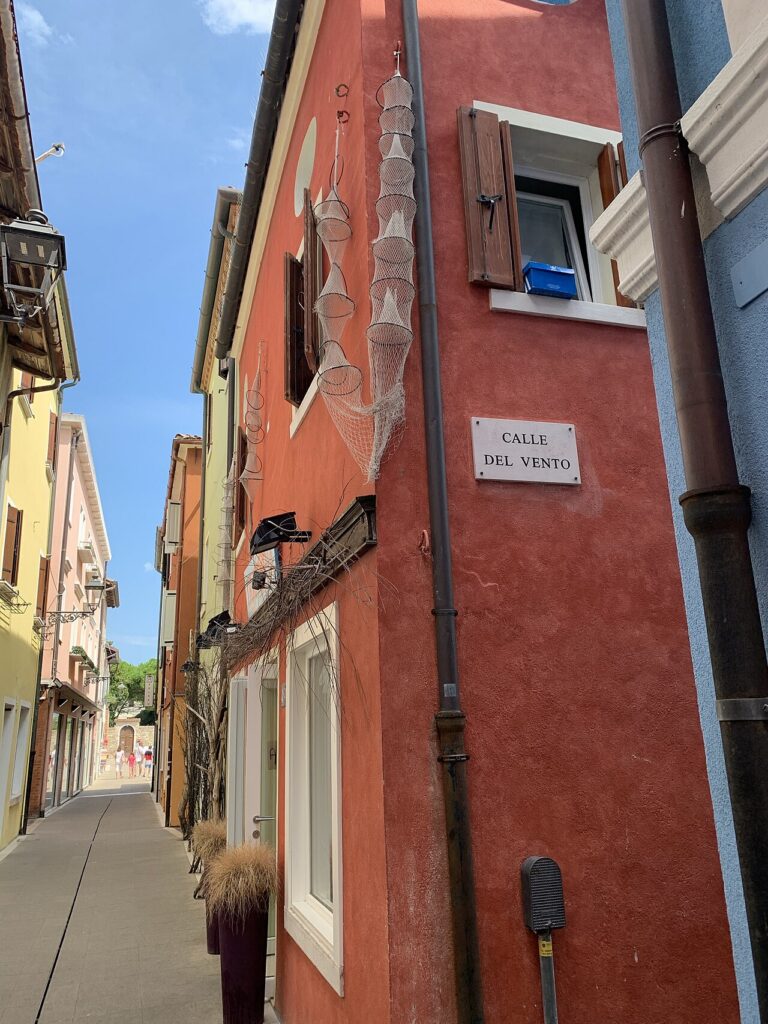
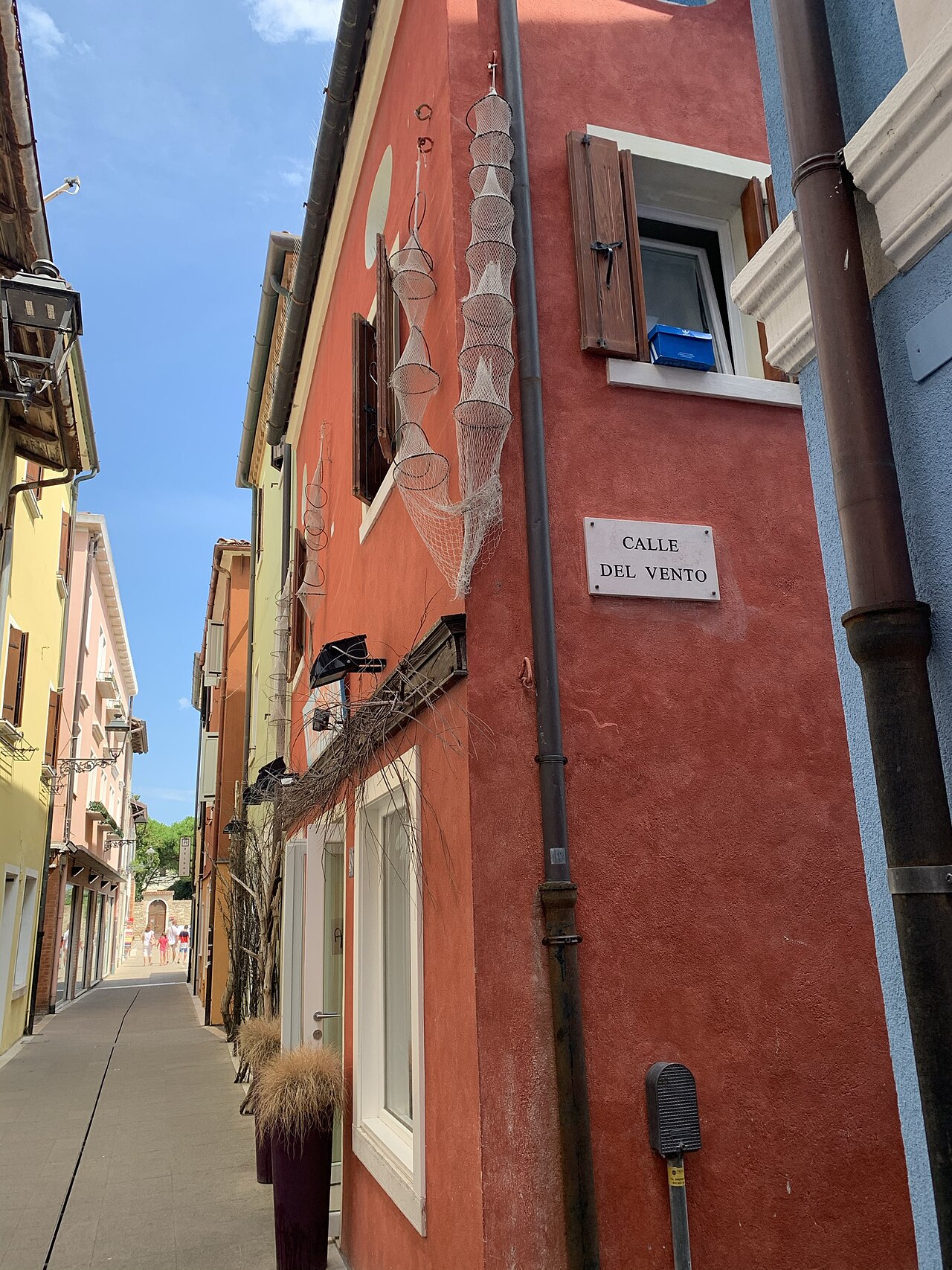
Caorle is the surprise of this stretch of coast. An old fishing town of Roman origin, it retains a historic centre of colour-washed lanes, low houses, a cylindrical bell tower unique in the Veneto and a still-active fishing fleet. The walk along the Sassi (the long stone parapet east of the historic centre) is one of the finest on the upper Adriatic. Caorle is reached from Jesolo in 50 minutes by car along the coast road, or in just over an hour through Eraclea via inland roads. Half a day is enough for the centre; a full day if you want a fish lunch and time on the beach.
Treviso, Padua and the inland
The inland of eastern Veneto offers cultural alternatives that few beach visitors actually explore. Treviso, just over an hour by car or by direct ATVO bus, is a manageable art city: Piazza dei Signori, the Calmaggiore, the urban stretch of the Sile, the Santa Caterina museum and some of the best-known patisseries of the north-east. Half a day is enough for the historic centre, a full day if you want to add an osteria lunch.
Padua is further away (an hour and a half by car, two hours by bus and train) but worth the trip for those who have never been: the Scrovegni Chapel with the Giotto frescoes, the Prato della Valle, the Basilica of Sant’Antonio. A serious visit needs a full day. From Padua you can then, on a separate day, organise a visit to the Venetian villas of the Brenta riviera (Villa Pisani at Stra, Villa Foscari “la Malcontenta”), with a river-boat service running from Padua in high season.
A typical week: how to fit the excursions in
A week in Jesolo typically allows four or five full beach days and two to three excursions. A reasonable balance, especially for first-time visitors:
- Day 1: arrival, settling in, first evening walk along the seafront.
- Day 2: beach all day, to settle into the rhythm.
- Day 3: Venice (full day, early start).
- Day 4: beach, or half a day cycling to Cavallino.
- Day 5: the northern lagoon (Burano, Torcello, Murano).
- Day 6: beach and the evening market in Jesolo.
- Day 7: Caorle or Treviso to taste; departure.
For families with small children, lighten the Venice days and favour the islands of the northern lagoon, which are easier to visit with a pushchair and a few snacks in the bag. For first-time visitors to the Veneto, a day in Treviso is well spent: its compact scale and the canals running through the city make it a restful counterpoint to a Venice visit. More on holidays in Jesolo and on activities on the beach and around town in the dedicated pages.